Faded Olive Composite — Uelsmann's darkroom meets Crewdson's light
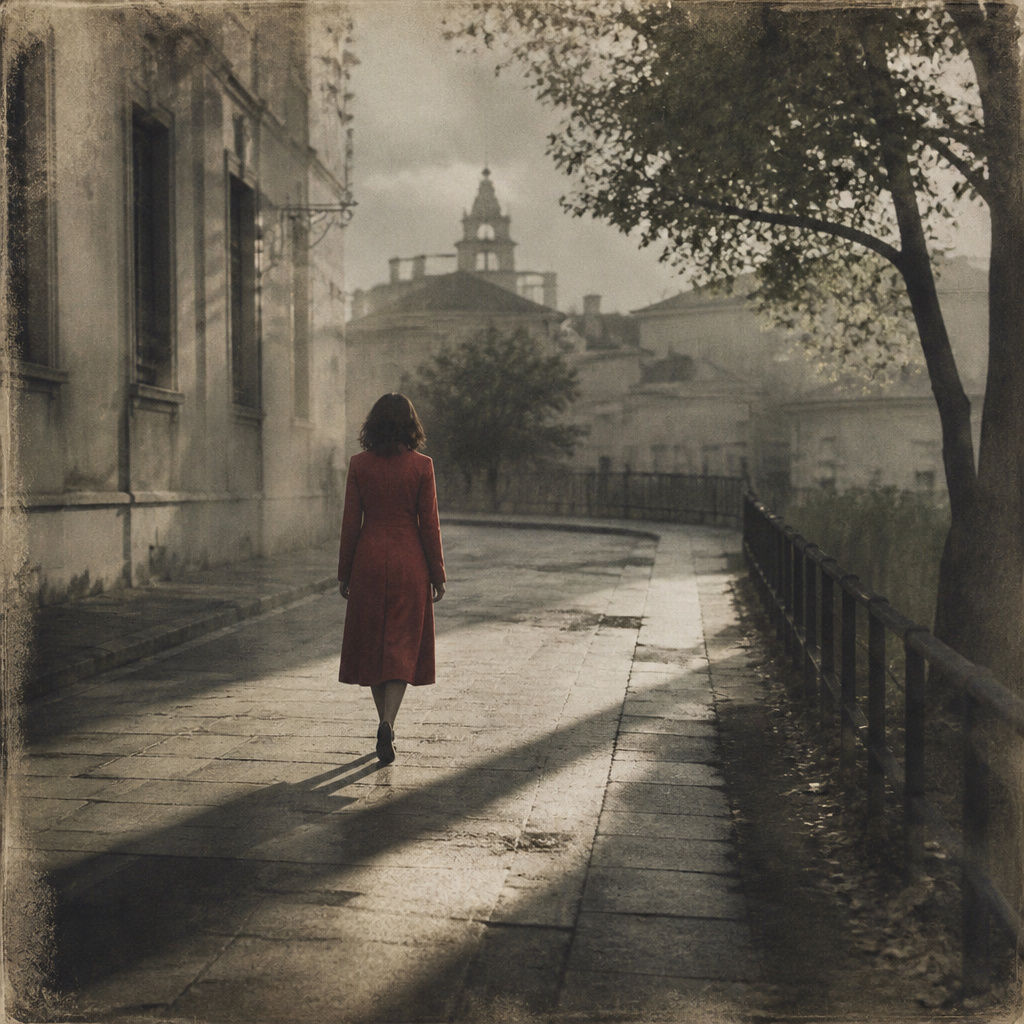
Jerry Uelsmann and Gregory Crewdson both make photographs that couldn't have been taken. Uelsmann built his in the darkroom, printing several negatives onto one sheet until a tree grew out of a lake. Crewdson builds his on a set, with a film crew and lighting rigs, so an ordinary street looks like the moment before something happens. Faded Olive Composite puts the two together and then ages the result: as if one of those prints had sat in a drawer since the seventies.
The blend
The prompt gives each ingredient one job, and keeps them from overlapping:
- Jerry Uelsmann — the construction. Multi-negative composite printing creates seamless layered elements through matched grain and burned-in edges. This is where the picture-made-of-pieces quality comes from: crisp, slightly cut-out shapes laid against each other.
- Gregory Crewdson — the light and colour. Flat overcast light via a restricted olive, sepia and ash palette holding one saturated note against muted fields. The "one saturated note" matters most: everything stays quiet except a single thing.
- A faded chromogenic print — the age. Lifted milky blacks, dye fade and soft grain. Chromogenic is the ordinary colour print from a lab. Its dyes fade unevenly, and the blacks drift up towards grey, which is what turns the palette olive.
The two photographers rhyme, which is why the blend holds. Both make staged, impossible pictures. Uelsmann does it by hand, after the fact, and Crewdson does it in front of the camera. The prompt takes Uelsmann's method and Crewdson's mood rather than averaging the two.
On four models
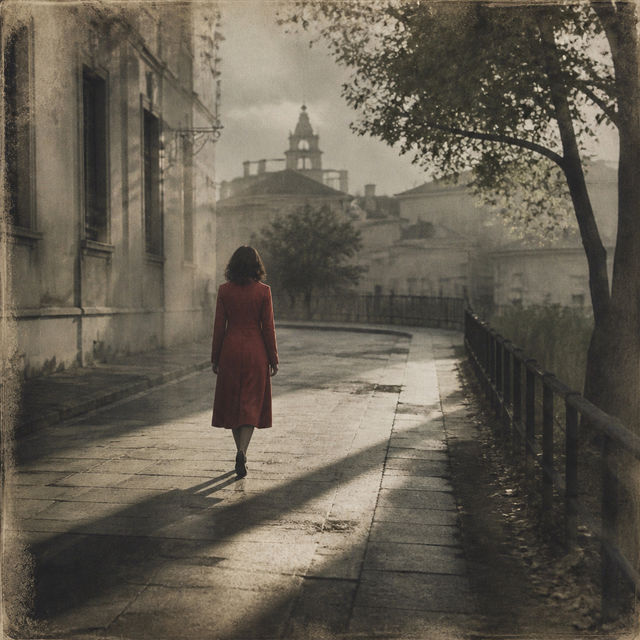
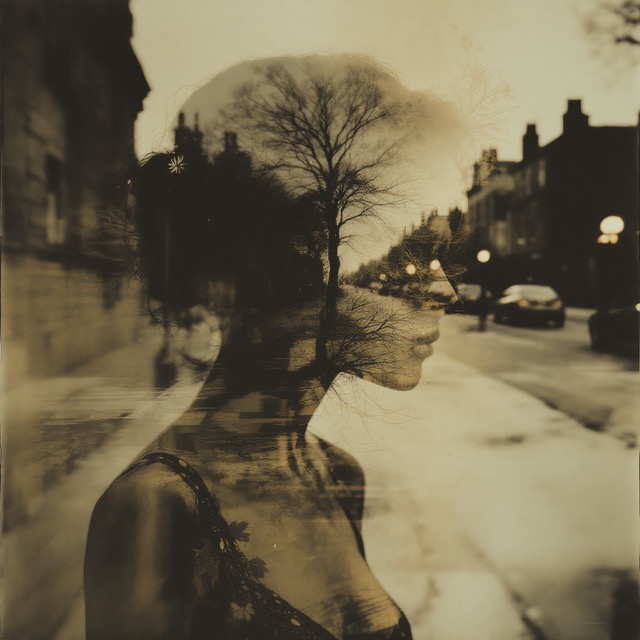

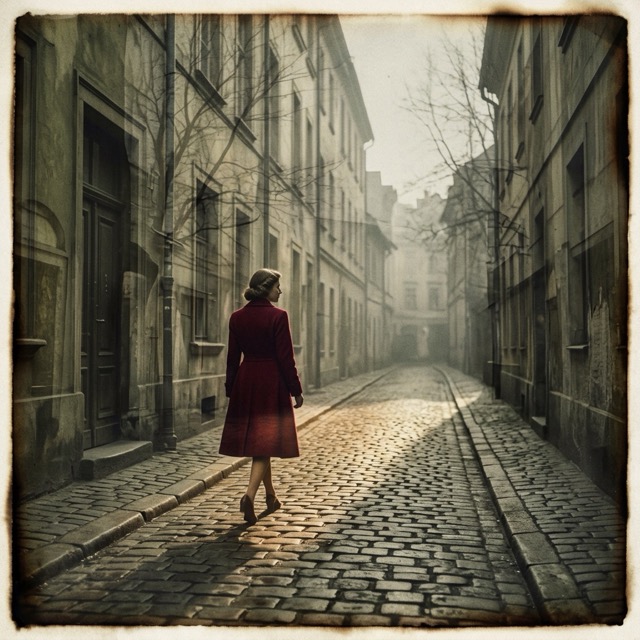
Every style here is rendered against the same subject, a short poem about a woman walking down a quiet sunlit street, so the differences come from the model, not the prompt. The four split the recipe between them:
- GPT Image 2 got the colour exactly: muted olive and sepia, with a red coat as the one saturated note, and a worn edge to the print. But it's a single photograph. The Uelsmann compositing barely shows.
- Nano Banana 2.1 landed closest to GPT. Red coat on a cobbled street, an olive-and-sepia cast, and the most convincing aged print of the four, with burned and frayed edges. It's also a single photograph, though: no layering at all.
- Flux 1.1 Pro made the most Uelsmann-like picture of the four: a true double exposure, a woman's profile with a bare tree printed inside it, laid over a street of parked cars and lamplight. The join is seamless, the way his were. What it dropped is Crewdson's half. It's sepia throughout, with no saturated note.
- Muse 1.0 builds the picture out of pieces too, but differently. The street is assembled from overlapping, torn photographic fragments, each a slightly different exposure, with a red scarf as the one saturated note and a faint cut-out edge around the walking figure. The tears make it read as collage rather than darkroom, but it's the only render that carries all three ingredients at once.
Using it
Because the palette does most of the work, the style suits quiet subjects: streets, interiors, a single figure. Give the scene one thing worth making the saturated note, such as a coat, a door or a car, and the prompt will usually find it.
Want the compositing to show? Muse and Flux both build it, in different ways: Flux as a seamless double exposure, Muse as a torn-paper collage. GPT Image and Nano Banana keep the aged print and the palette but flatten everything into a single photograph.
Both artists are named in the prompt, so a hosted model may refuse it. The style page has a model-neutral version that swaps the names for what they stood for ("darkroom photomontage", "staged cinematic tableau"). There's also an effect-only version with the recipe removed altogether.