Hennaed Bristle Haze — Zorn's four colours, Mullins's soft edges, and a henna-stained ground
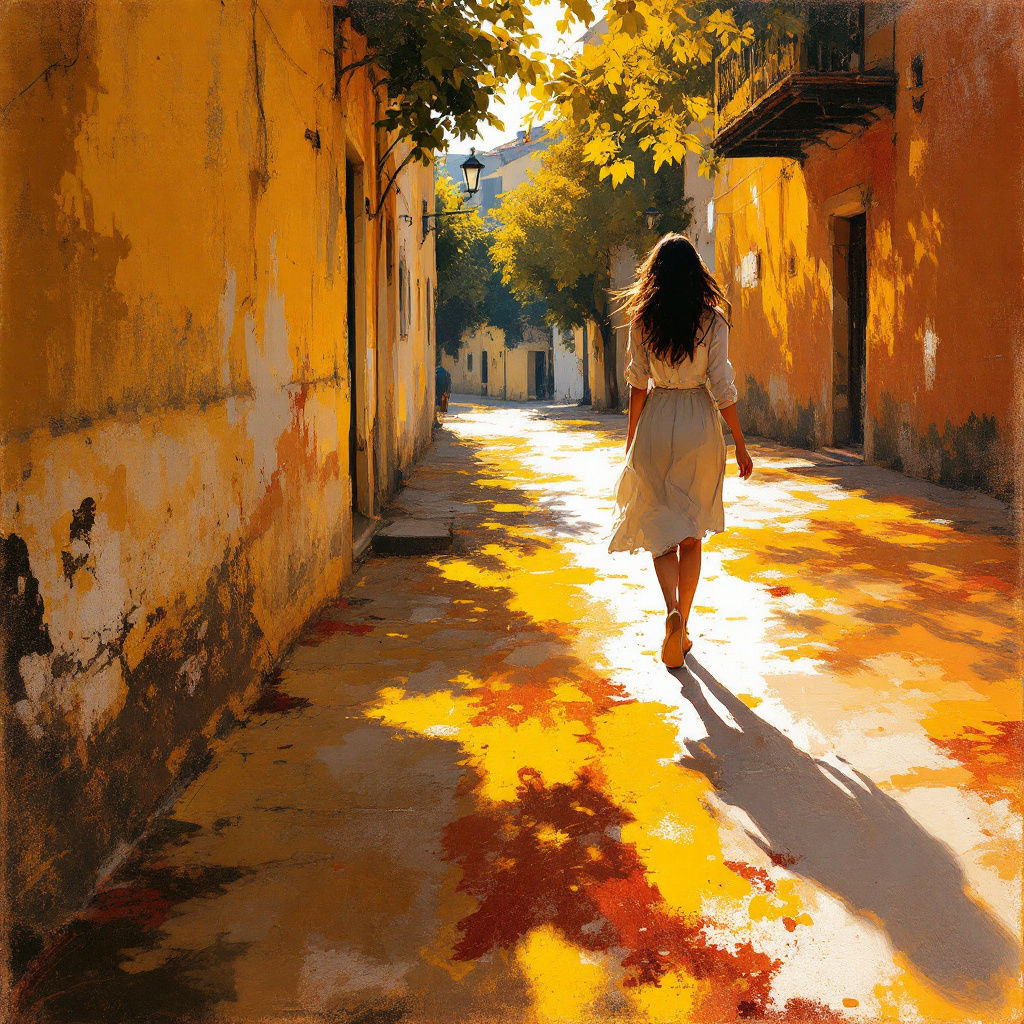
Quick, directional brushstrokes in just four colours, laid over a rust-brown stain that soaks into the ground and glows through wherever the paint is thin. Highlights are warm and glazed, the darks are cool, and edges come and go. Detail is sharp where your eye lands and loose everywhere else, so the picture feels painted fast by someone who knew exactly where to stop.
The blend
- Anders Zorn — the palette. Zorn's restricted ivory-black, yellow-ochre, vermilion and white palette creates tightly harmonised mixtures through economical, directional bristle strokes. Zorn famously painted with only four colours. Everything mixed from them belongs together, and he put each stroke down once.
- Craig Mullins — the edges. Mullins's digital painting produces atmospheric depth via lost-and-found edges and crisp specular accents against scumbled passages. A concept artist's way of seeing: soft, hazy areas that open up the space, with a few sharp glints to pull the eye.
- Henna stain underpainting — the ground. Henna's translucent tannin stain infuses a rust-brown underlayer that soaks into the ground and shows through thin paint. A warm, earthy colour soaked into the surface before painting starts, the way henna stains skin.
Zorn and Mullins are a century apart, one painting in oil and the other digitally, but they paint the same way: few strokes, nothing overworked, light doing most of the work. Henna is what makes it more than a tribute. Painters often start on a warm toned ground, and henna is a stranger, more organic version of one. It's rust rather than tidy brown, and it soaks in rather than sitting on top, so it shows through the thin paint instead of being covered over.
Henna has turned up once before, in #680 Beaded Resist Veils, but there it was the decorative pattern of wedding henna. This is the first style to use it as a stain under the paint.
On four models
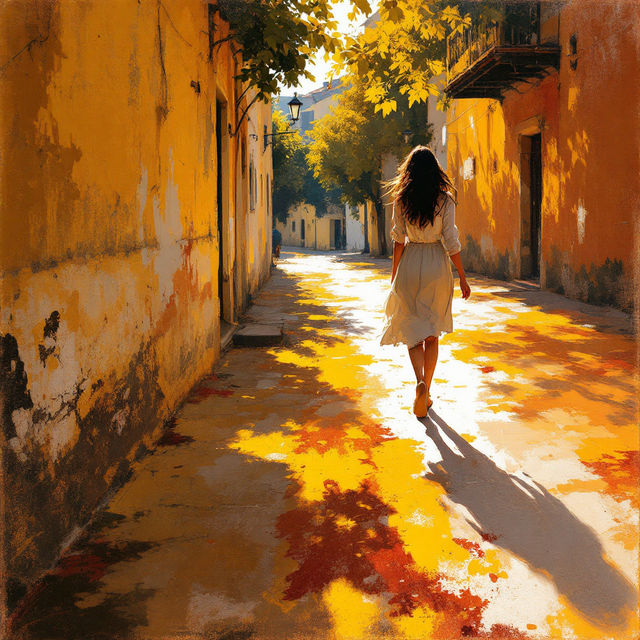
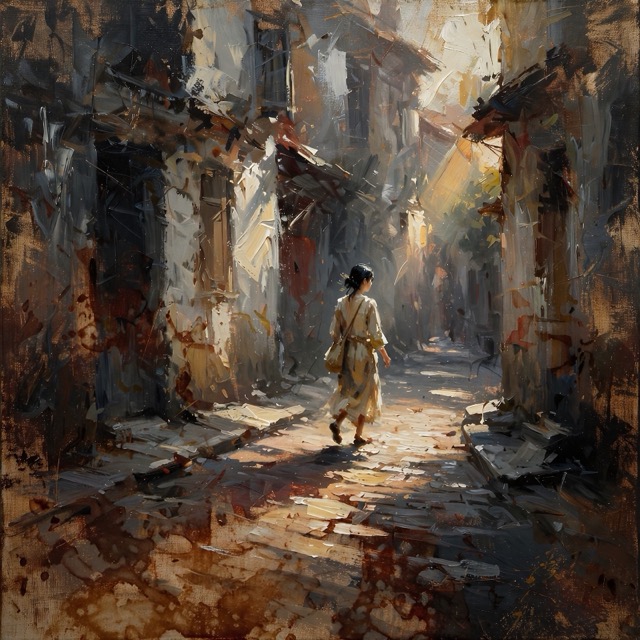
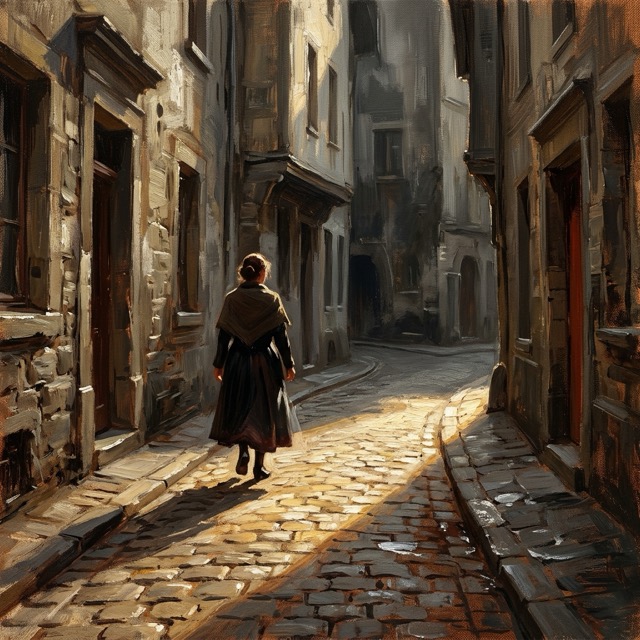
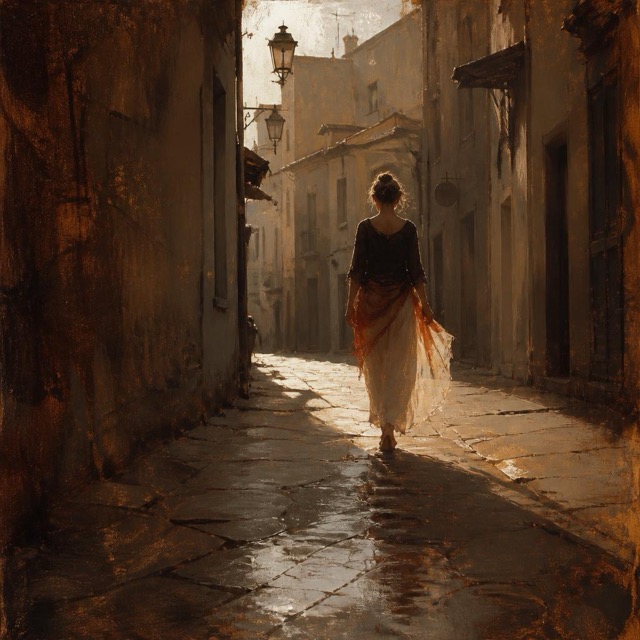
Every render used the original prompt, artist names and all, with the collection's usual haiku as the subject.
- Flux (the canonical) went the loudest. A blazing ochre-yellow alley with rust-red stains splashed across the paving, and a woman in a cream dress walking into the sun. It's more henna than Zorn: the palette is far brighter than four restrained colours would give.
- GPT Image 2 is the most Zorn: dark and low-key, the rust underlayer showing through the walls, wet stone shining, and a rust-and-cream skirt. It's the closest to the restraint the prompt asks for.
- Muse 1.0 is the most Mullins: slashed bristle and palette-knife strokes, hazy light at the end of the street, and rust stains bleeding up through scraped paint.
- Nano Banana 2.1 is the most finished: a crisp cobbled alley and a woman in a dark shawl, with a warm brown cast but the least visible stain. It's handsome, but it's the one that lost the brushwork.
Using it
It suits figures, streets, interiors and portraits: anything with one strong light source and a clear place for the eye to land. The palette runs warm, so it's a natural fit for sunlight, firelight and evenings. For a cooler or quieter result, the GPT render shows how far the four colours can be pulled down.
Tags: Painterly · Impressionism · Concept Art · Digital Painting · Limited Palette · Underpainting · Drybrush · Scumbling