Six styles with a pop-culture wild card
Most styles here are built to one recipe: two artists, each contributing one technique, plus a wild card from somewhere else entirely. For a while the wild card kept landing on obscure crafts: struck coins, stamp perforations, cigar-box fretwork. They were interesting, but none of them was a surprise anyone would feel. This batch changes where the third element comes from. It is now as likely to be a people's culture, a film or TV show, a brand, or a place and its crowd as it is to be a craft.
The rule that makes it work is that the reference brings its vibe, never its things. A zoot-suit dance hall should give you chalk pinstripes and buffed two-tone leather, not a man in a zoot suit. A cola label should give you one hot red against flat cream, not a bottle. The model-neutral version of each prompt drops the reference's name and keeps only that look, because the hosted models draw whatever they're named. Asked for "soda colour", one of them painted a soda advert.
Each style started from one of my older images, used as a seed rather than a target.
The six
Pinned Strata Flannel
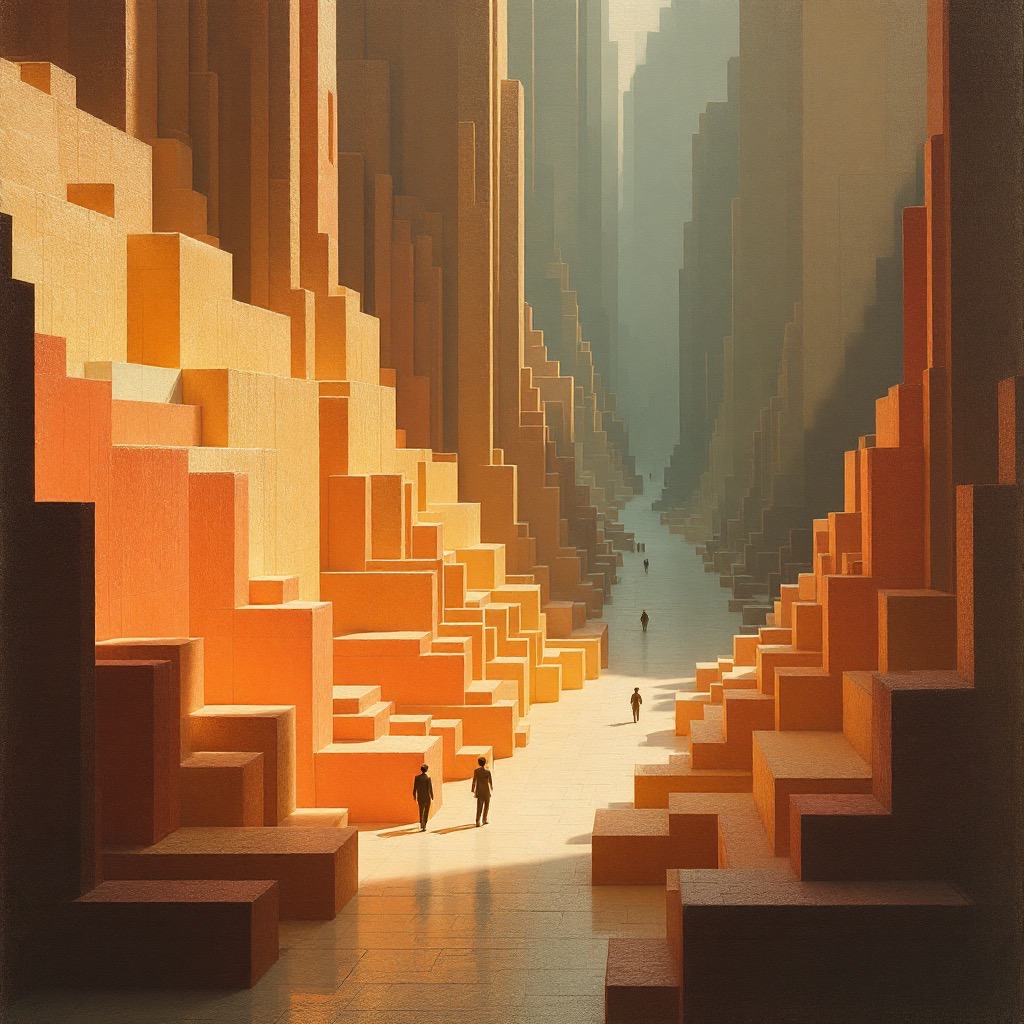
- Eduard Imhof, the Swiss cartographer, contributes relief shading: terrain built from stepped contour tiers under a low raking light.
- Alexandre Alexeieff contributes pinscreen shading, the velvety smoked gradients he made by pushing thousands of pins in and out of a board.
- Montreal's 1940s zoot-suit swing kids contribute the wardrobe: brushed charcoal flannel, chalk pinstripes, polished two-tone leather.

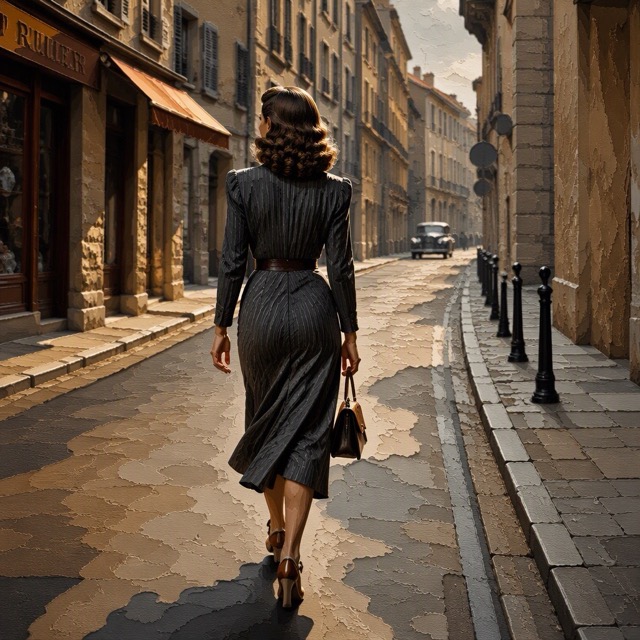

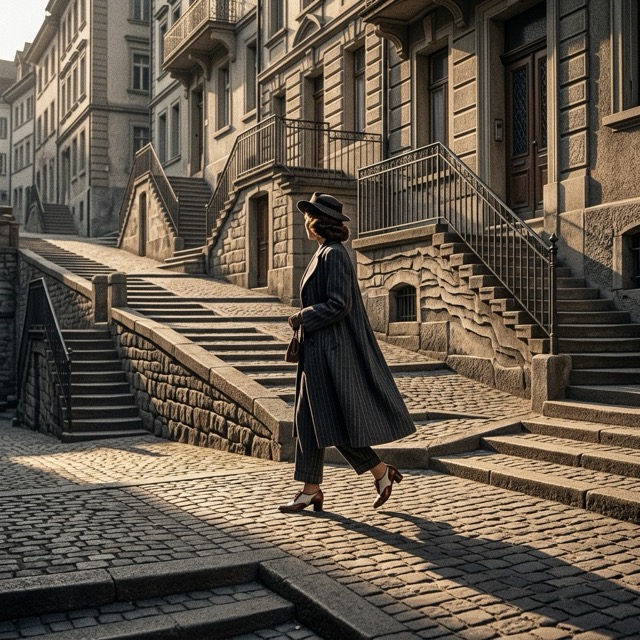
Flux took the terracing literally and built a stepped orange canyon with tiny walkers at the bottom. The other three models put the swing kids' clothes on the figure instead: a pinstriped 1940s dress on a cobbled street, carved into strata on Muse.
Scanline Wool Facet
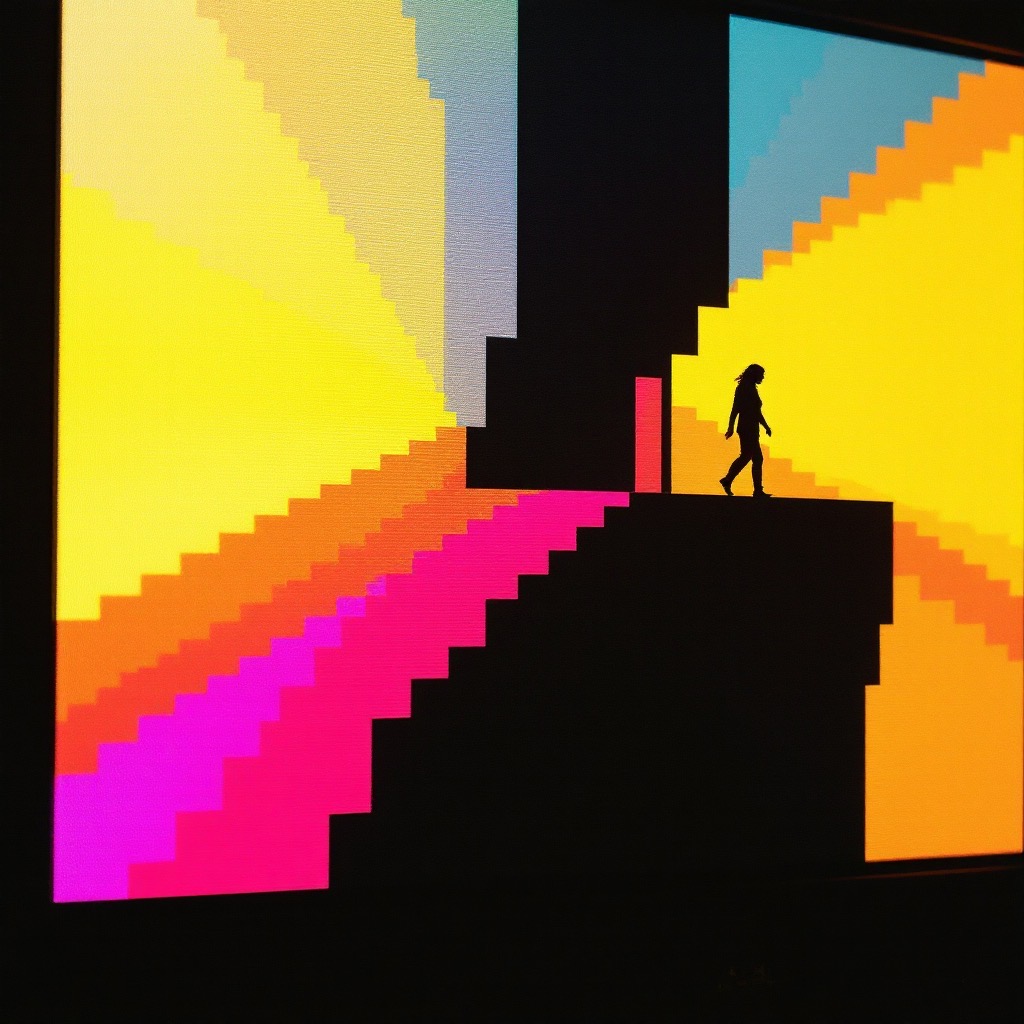
- Jean Lurçat, who revived French tapestry, contributes coarse-weave hatching in a numbered wool palette.
- Alexandra Exter contributes Cubo-Futurist faceting: hard diagonal cuts between flat planes of colour.
- A Soviet ZX Spectrum clone on a household TV contributes colour clash: two colours to a square cell, hard bled borders, faint scanline shimmer.

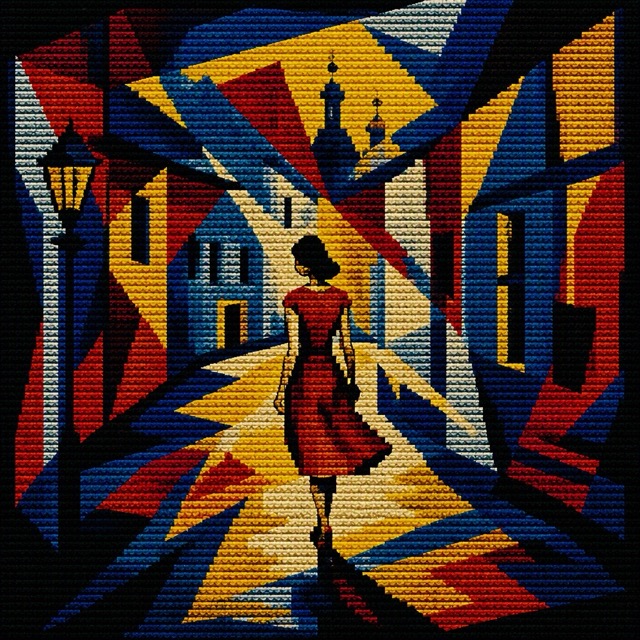

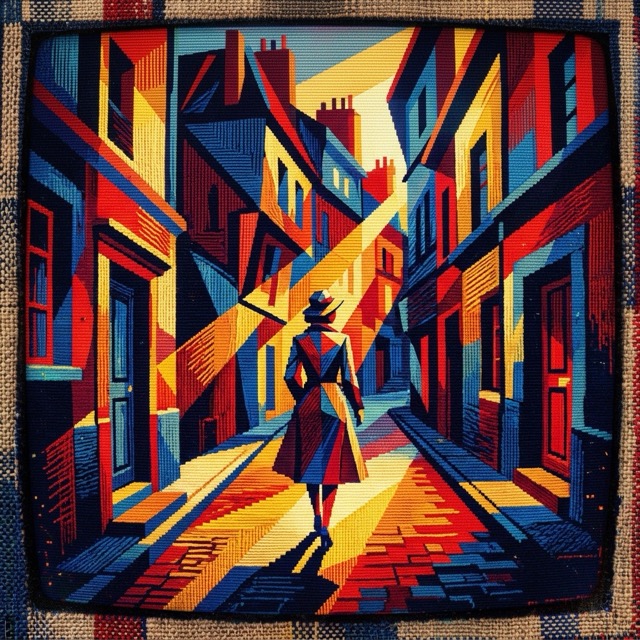
This is the clearest case of vibe over thing. No model drew a computer. Flux made a pixel staircase in hot primaries; GPT, Muse and Nano Banana all made a woven tapestry, with the Spectrum showing only as stair-stepped edges and clashing reds, yellows and blues.
Stepped Maze Overprint
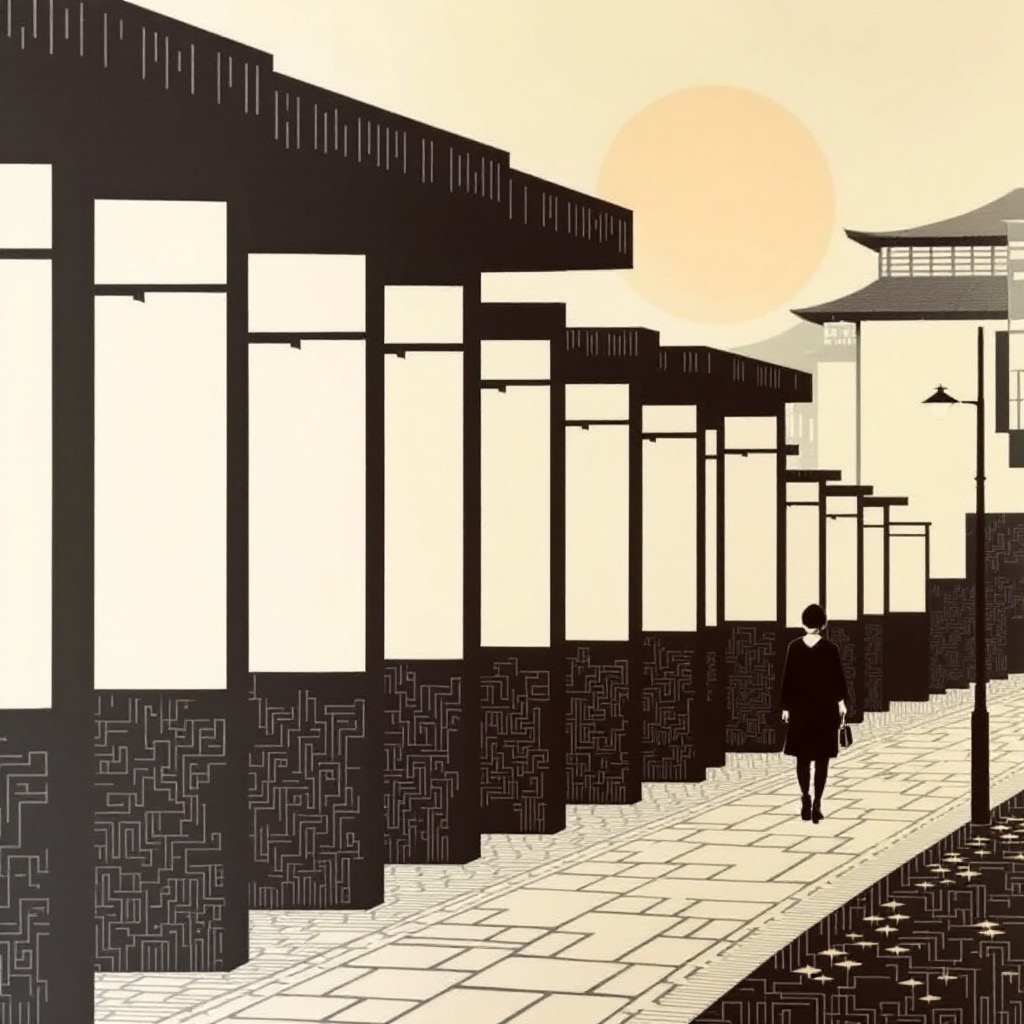
- Hiroshi Yoshida contributes shin-hanga overprinting: one block printed again and again in graded values until the tone ramps softly.
- Lotte Reiniger, the silhouette animator, contributes scissor-cut layers with crisp edges and light behind them.
- Shipibo-Conibo kené, the maze-like line painting of the Peruvian Amazon, contributes dense parallel-line fills.
Flux made a colonnade of cut-paper shapes with maze-patterned bands along the bottom. The others carved it: a relief street with the patterning running through walls and paving.
Tick-Woven Cardboard Ink
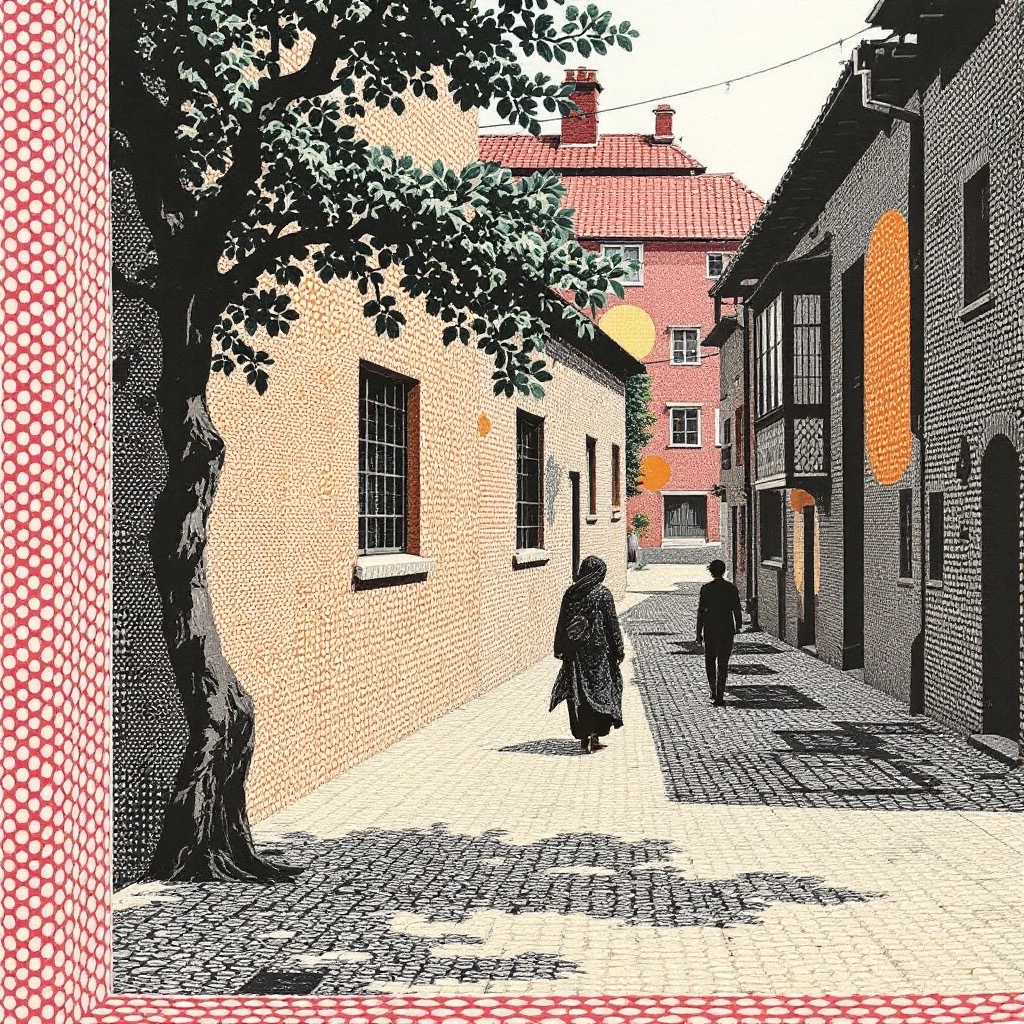
- Jangarh Singh Shyam, the Gond painter, contributes dot-and-dash infill packed edge to edge inside flat shapes.
- Anni Albers contributes the woven grid: stepped edges and modular warp-and-weft rhythm.
- Belomorkanal cigarette packets contribute the print: coarse grey board, flat black, and one red slightly off register.
The cigarette brand shows up only as the paper and the single red.
Gouged Overprint Stack
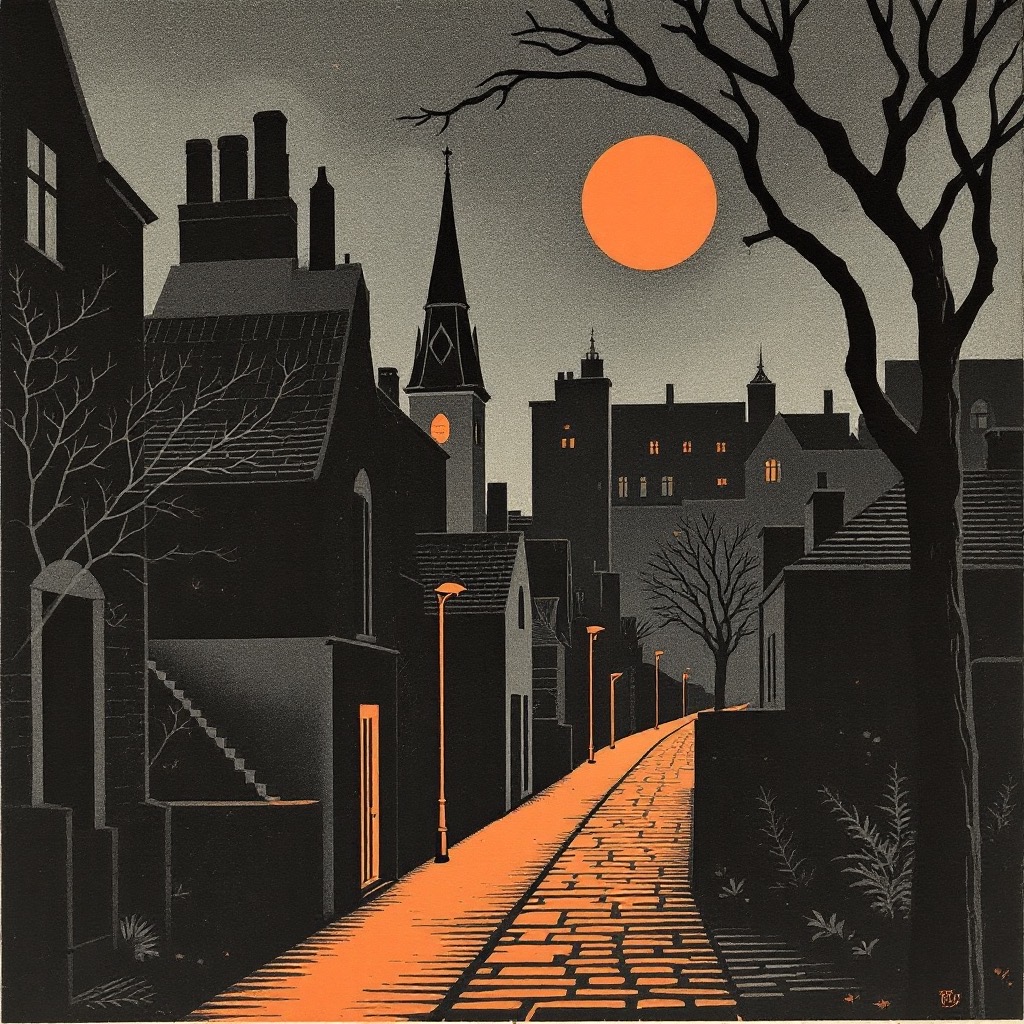
- Maurice Noble, who designed the backgrounds for the Road Runner cartoons, contributes flat layered planes that build depth by stepping back in tone.
- Frans Masereel contributes the woodcut: thick black contours and knife-cut white hatching.
- Lion matchbox labels from mid-century Durban contribute cheap two-ink overprint on rough paper.
The most consistent of the six: every model made a woodcut street with one warm accent, and none of them drew a matchbox.
Speckled Spot-Red Cutout
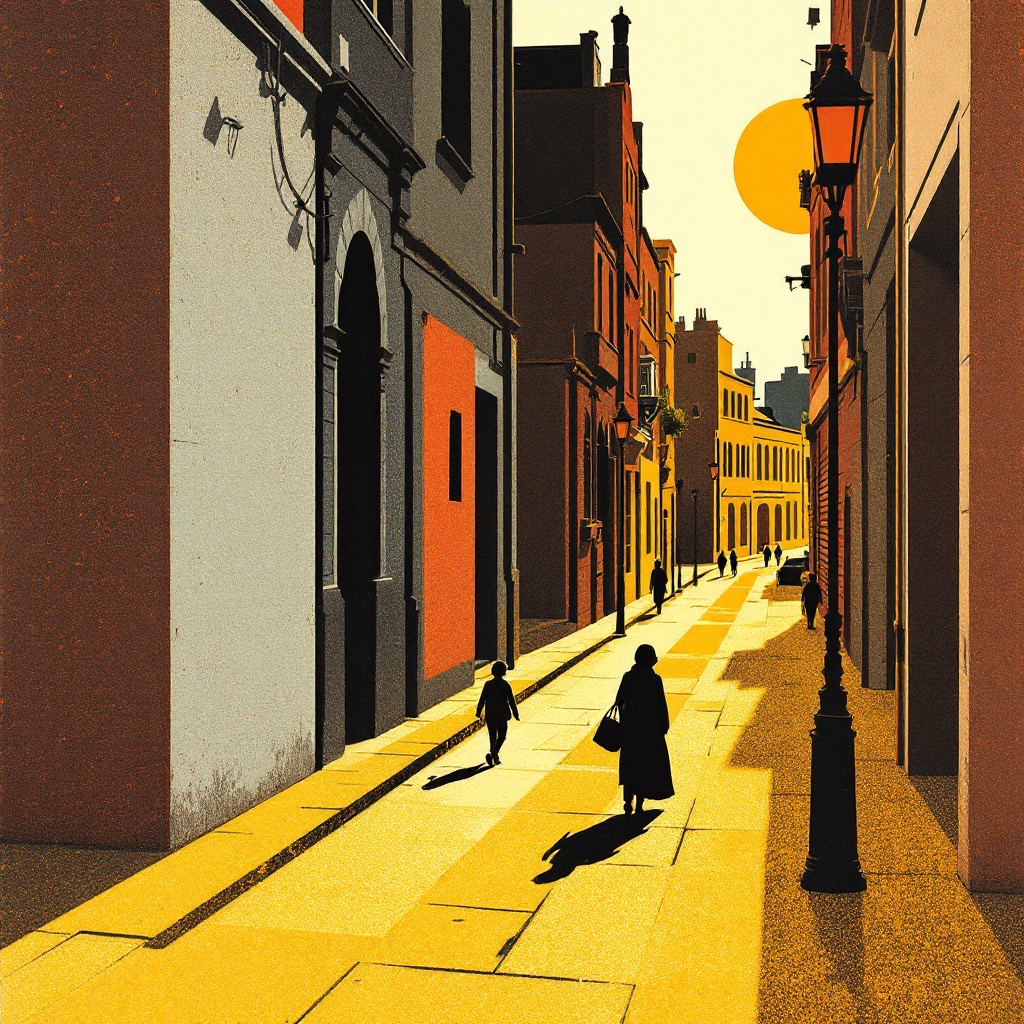
- Bernard Villemot, the French poster artist, contributes flat contourless colour and clean silhouettes.
- Edward Bawden contributes the speckle of a roller-inked linocut, where uneven pressure leaves the ink broken.
- A 1970s Tehran cola label contributes one hot red against everything else held quiet.
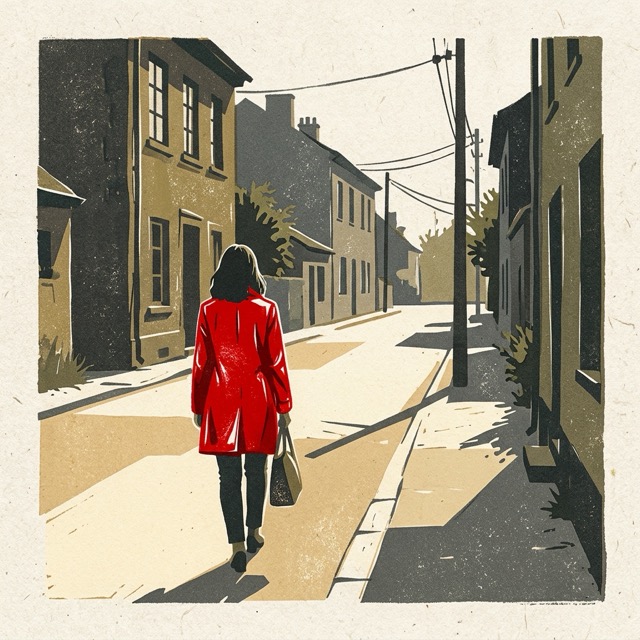
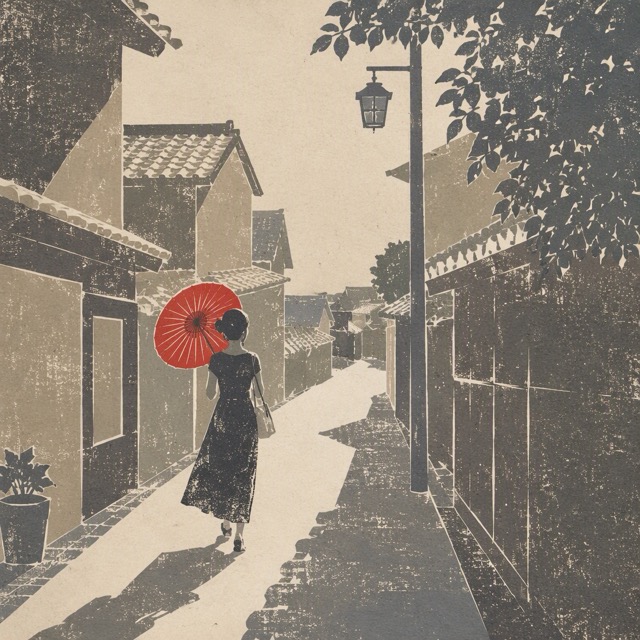
This one fought back. With the artists named, GPT painted an actual cola advert, bottle and all. With the names swapped for "French poster art", GPT painted French travel posters with headlines, and Nano Banana painted a poster lying on a table. What worked was the effect-only version, which describes only how the surface behaves: flat fills, speckled linocut ink, one hot red. On that, GPT made a block-print street with a single red parasol.


What I learned
- A reference you'd recognise beats an obscure one. Every one of the six wild cards is something a person might have seen, and every one changed the surface rather than the scene.
- Naming a thing gets the thing drawn. The first version of the Tehran cola prompt said "soda", and GPT painted a soda advert, bottle and lettering included. Describing only the colour fixed it.
- The poem is still a problem. GPT, Muse and Nano Banana sometimes set the subject haiku as text. Four renders here were redone on a plain description of the scene instead of the poem, so those four aren't on the standard subject.
- When a prompt won't behave, strip it back. Try the artists' names first, then the version without names, then the effect-only version. Each step removes something a model might draw instead of the style.