Just Rob Styles › Print/Graphic
UrbanMemory
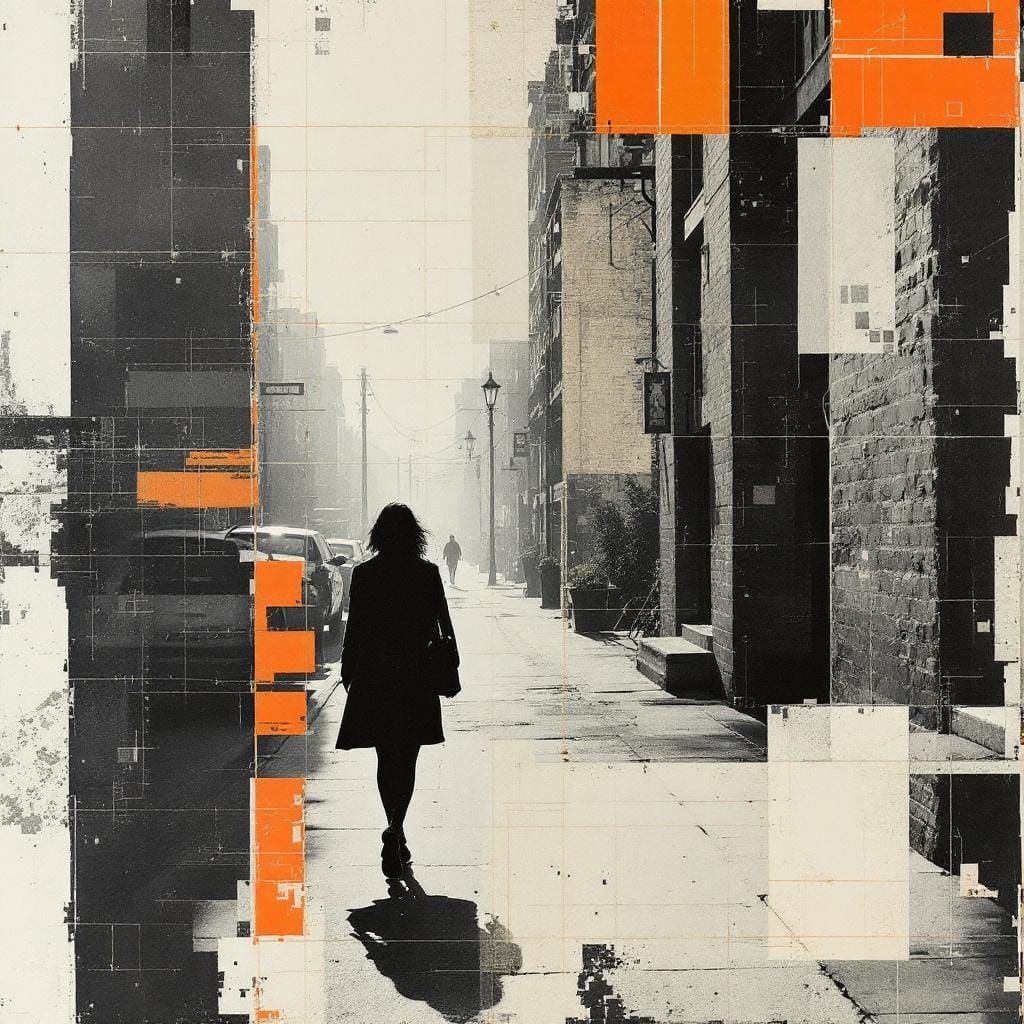
A print/graphic AI art style prompt drawing on Neo-Dada and Collage. Copy the prompt below into any text-to-image model, then add your own subject at the end. The prompt only describes the look.
The blend
The prompt combines 3 ingredients and gives each one a job:
- Rauschenberg — Rauschenberg's transfer printing creates photographic overlay depth that amplifies urban melancholy.
- Schwitters — Schwitters's systematic fragment arrangement produces geometric layering that heightens nostalgic intimacy.
- Bauhaus modernism — Bauhaus modernism infuses functional design logic.
The fusion manifests as textured paper edges, systematic grid overlays, and selective orange accent placement, preserving original subjects and settings.
On 4 models
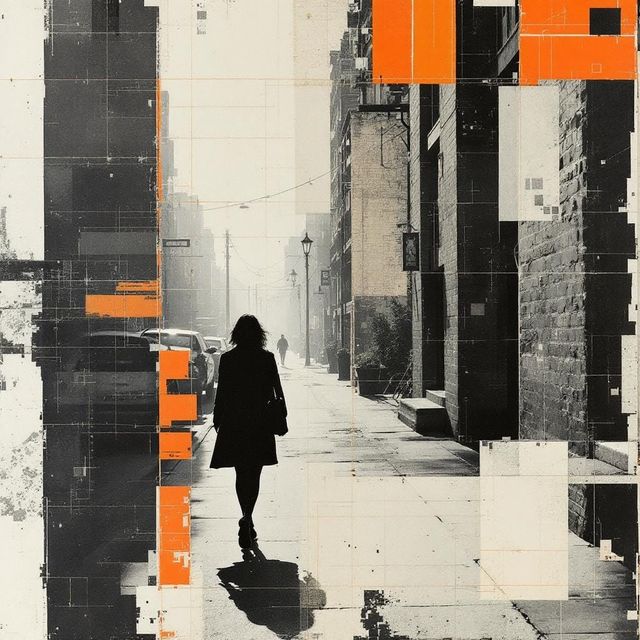
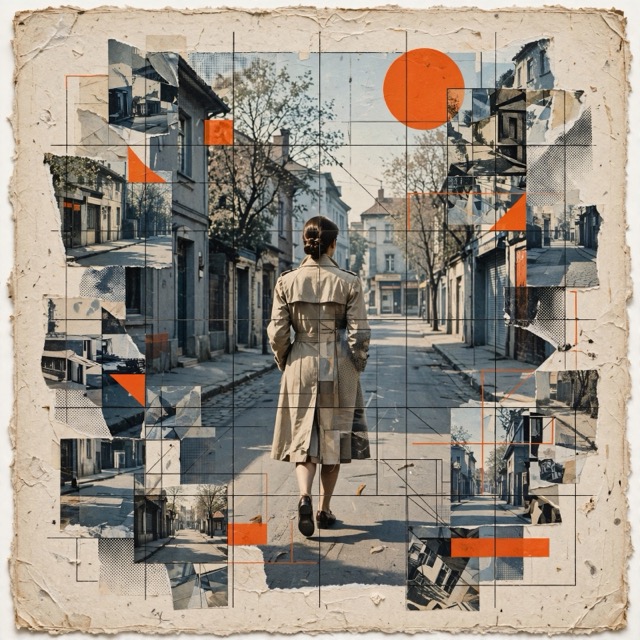
The same prompt and the same subject, rendered by different image models — so the differences are the model, not the prompt.


The prompt
Original
Rauschenberg + Schwitters + Bauhaus modernism, where Rauschenberg's transfer printing creates photographic overlay depth that amplifies urban melancholy, Schwitters's systematic fragment arrangement produces geometric layering that heightens nostalgic intimacy, and Bauhaus modernism infuses functional design logic. The fusion manifests as textured paper edges, systematic grid overlays, and selective orange accent placement, preserving original subjects and settings.
Render on BudgetPixel: FLUX 1.1 pro · GPT-Image-2 · Muse 1.0 · Nano Banana 2.1
Model-neutral
The same look with artist names and copyrighted references removed — for models that refuse them.
Transfer printing creates photographic overlay depth that amplifies urban melancholy, systematic fragment arrangement produces geometric layering that heightens nostalgic intimacy, and Bauhaus modernism infuses functional design logic. The fusion manifests as textured paper edges, systematic grid overlays, and selective orange accent placement, preserving original subjects and settings.
Render on BudgetPixel: FLUX 1.1 pro · GPT-Image-2 · Muse 1.0 · Nano Banana 2.1
Effect only
The recipe removed — no artists, no wild card, no movements. Only what the style does to a surface.
Photographic imagery overlaps in translucent transfer layers, building depth through partial repetition, abrasion, and uneven ink density. Torn paper fragments retain tactile, fibrous edges while aligning into controlled geometric strata and systematic grids. Restrained values support a melancholy, intimate atmosphere, with selective orange accents placed for functional emphasis. Original subjects and settings remain clearly legible beneath the layered surfaces.
Render on BudgetPixel: FLUX 1.1 pro · GPT-Image-2 · Muse 1.0 · Nano Banana 2.1
Using it
- Paste the prompt, then add your subject after it — for example …, a lighthouse on a cliff at dusk.
- The original names artists. Some hosted models refuse that or quietly render around it — on those, use the model-neutral version, which describes the same handling without the names.
- The effect-only version drops the recipe altogether and describes only what the style does to a surface. Use it to mix this look into another style, or when you want nothing traceable to a source.
- Every sample here was rendered against the same short subject — Quiet streets whisper / Her footsteps echo softly / Sunlight paints her path — so it shows the style, not a lucky subject.
Tags
Similar styles
 FragmentiqueA fusion of Dave McKean+Patrick Nagel+abstract expressionism where fragmented geometric compositions create a grid-like…
 Meniscus Sliver GridMary Delany + Ikko Tanaka + Kodak Box Brownie snapshots, where Delany's paper-mosaic collage creates dimensional fine…
 DynamicTranslucenceWassily Kandinsky + Helen Frankenthaler, where Kandinsky's layered transparent geometric forms create overlapping…
 Smeared Toner StrataJacob Bannon + Francis Bacon + distressed photocopy-and-ink print texture, where Bannon's layered torn-paper collage…
 Split-Channel Dot ScreenAndy Warhol + Ryoji Ikeda + cross-processed film photography, where Warhol's photo-silkscreen creates flat thresholded…
 Seamed Enamel BandwidthJiří Kolář + Eugène Grasset + 1980s Doordarshan station ident cards, where Kolář's intercollage creates interwoven…
 Urban Decay NoirFranz Kline + Alberto Burri + film noir aesthetic, where Kline's bold black gestural strokes create architectural…
 CollagePrecisionIn style of Hannah Höch + Egon Schiele, where Höch's dimensional collage mastery creates layered mixed-media depth that…