Just Rob Styles › Conceptual Art
Overlay: AsciiArt
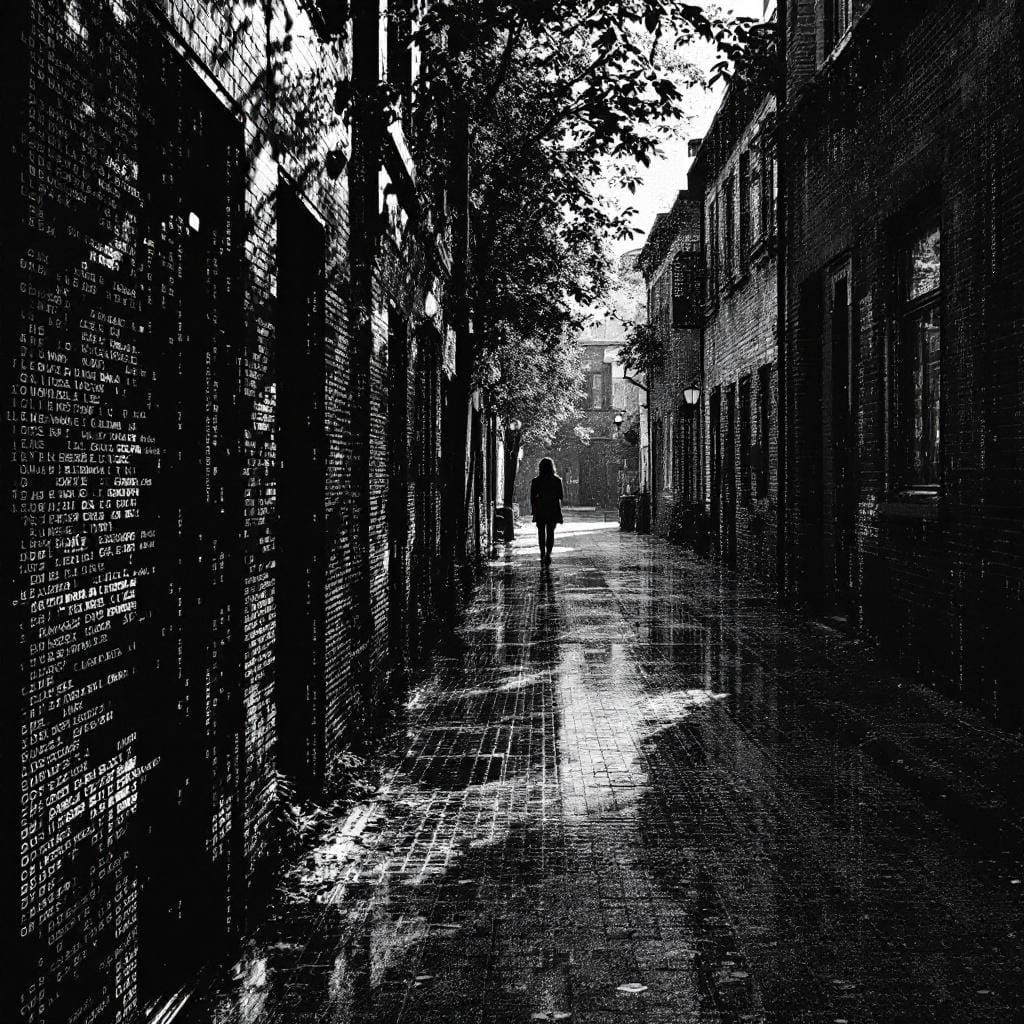
A print/graphic AI art style prompt drawing on Generative Art and Conceptual Art. Copy the prompt below into any text-to-image model, then add your own subject at the end. The prompt only describes the look.
The blend
The prompt combines 2 ingredients and gives each one a job:
- In style of Casey Reas — Reas's computational precision creates systematic ASCII character overlays that amplify digital craftsmanship.
- Sol LeWitt — LeWitt's instruction-based methodology produces organized textual patterns that heighten visual complexity.
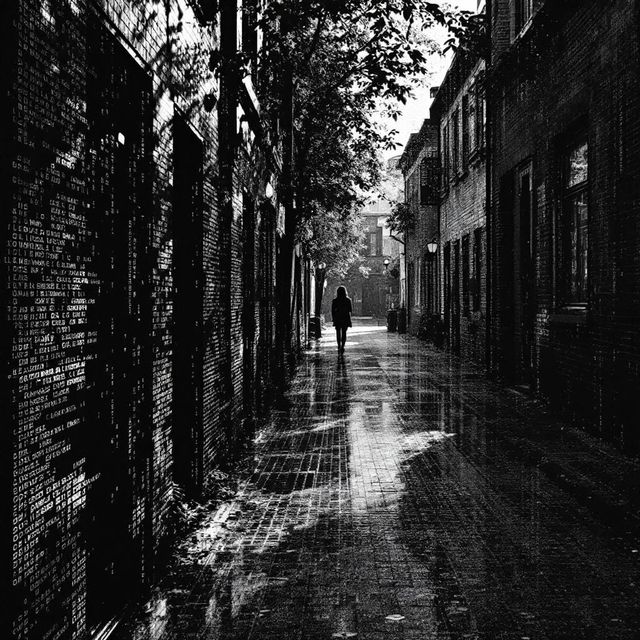
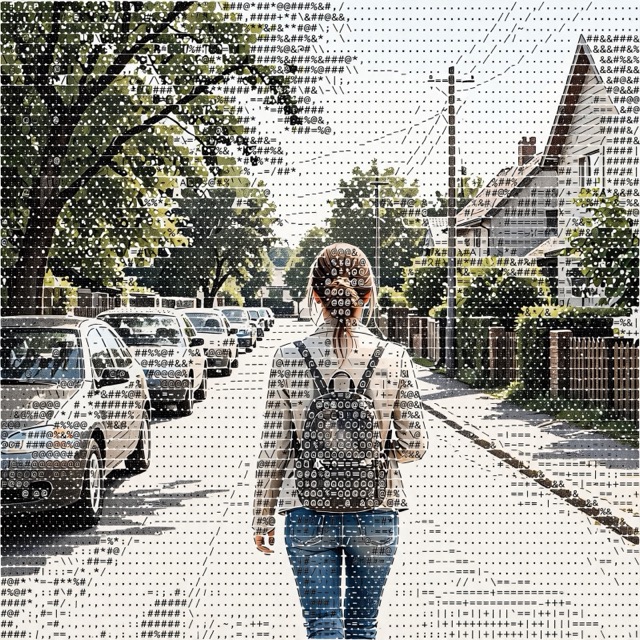
The fusion manifests as ASCII art overlay tracing image contours and forms, with characters matching the underlying content's structure - dense text for dark areas, sparse characters for light areas, creating dual-layer depth with digital-analog resonance, preserving original subjects and settings.
On 4 models
The same prompt and the same subject, rendered by different image models — so the differences are the model, not the prompt.


The prompt
Original
In style of Casey Reas + Sol LeWitt, where Reas's computational precision creates systematic ASCII character overlays that amplify digital craftsmanship, and LeWitt's instruction-based methodology produces organized textual patterns that heighten visual complexity. The fusion manifests as ASCII art overlay tracing image contours and forms, with characters matching the underlying content's structure - dense text for dark areas, sparse characters for light areas, creating dual-layer depth with digital-analog resonance, preserving original subjects and settings.
Render on BudgetPixel: FLUX 1.1 pro · GPT-Image-2 · Muse 1.0 · Nano Banana 2.1
Model-neutral
The same look with artist names and copyrighted references removed — for models that refuse them.
Computational precision creates systematic ASCII character overlays that amplify digital craftsmanship, and instruction-based methodology produces organized textual patterns that heighten visual complexity. The fusion manifests as ASCII art overlay tracing image contours and forms, with characters matching the underlying content's structure - dense text for dark areas, sparse characters for light areas, creating dual-layer depth with digital-analog resonance, preserving original subjects and settings.
Render on BudgetPixel: FLUX 1.1 pro · GPT-Image-2 · Muse 1.0 · Nano Banana 2.1
Effect only
The recipe removed — no artists, no wild card, no movements. Only what the style does to a surface.
Monospaced characters trace contours and occupy forms in systematic overlays while the underlying subject and setting remain legible. Character density tracks value, packing tightly through shadows and opening into sparse marks across highlights. Repeated textual units build intricate surface rhythm, precise alignment, and a second depth layer, with transitions controlled by gradual shifts in spacing and symbol weight for tactile digital and analog resonance.
Render on BudgetPixel: FLUX 1.1 pro · GPT-Image-2 · Muse 1.0 · Nano Banana 2.1
Using it
- Paste the prompt, then add your subject after it — for example …, a lighthouse on a cliff at dusk.
- The original names artists. Some hosted models refuse that or quietly render around it — on those, use the model-neutral version, which describes the same handling without the names.
- The effect-only version drops the recipe altogether and describes only what the style does to a surface. Use it to mix this look into another style, or when you want nothing traceable to a source.
- Every sample here was rendered against the same short subject — Quiet streets whisper / Her footsteps echo softly / Sunlight paints her path — so it shows the style, not a lucky subject.
Tags
Similar styles
 Overlay: Circuitboard LuminescenceApply glowing circuit pattern overlay with illuminated pathways flowing across image surface. Create translucent…
 Inlaid Black OverprintAubrey Beardsley + Shepard Fairey + screen print on cream stock, where Beardsley's solid ink masses create hard-edged…
 Split-Channel Dot ScreenAndy Warhol + Ryoji Ikeda + cross-processed film photography, where Warhol's photo-silkscreen creates flat thresholded…
 Smeared Toner StrataJacob Bannon + Francis Bacon + distressed photocopy-and-ink print texture, where Bannon's layered torn-paper collage…
 Etched LuminanceA fusion of Albrecht Dürer + glitch art + industrial design where Northern Renaissance engraving meets digital…
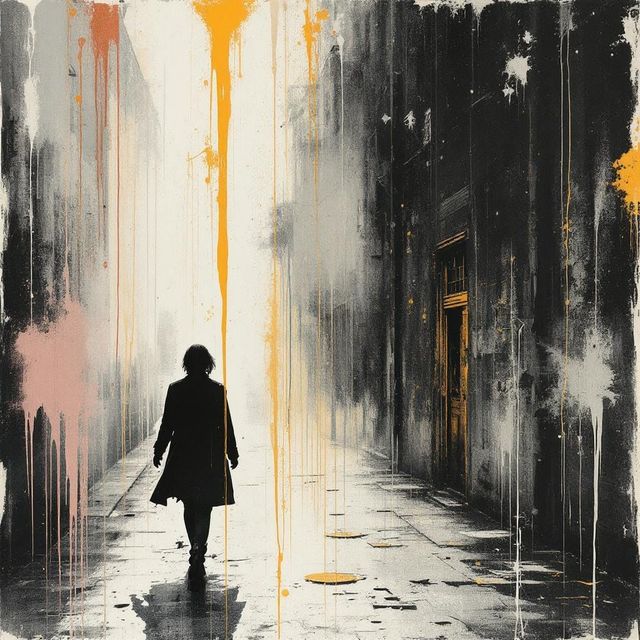 NocturnalEchoIn style of Gerhard Richter + Alberto Burri, where Richter's dragged paint and photographic blur creates layered…
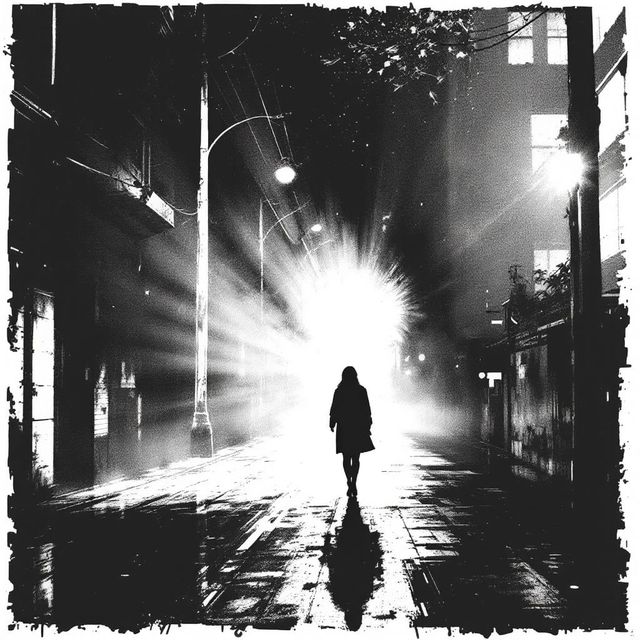 Solarized Zine PrintAndy Warhol + Robert Longo + Underground Zine Culture, where Warhol's screen printing mechanics create halftone dot…
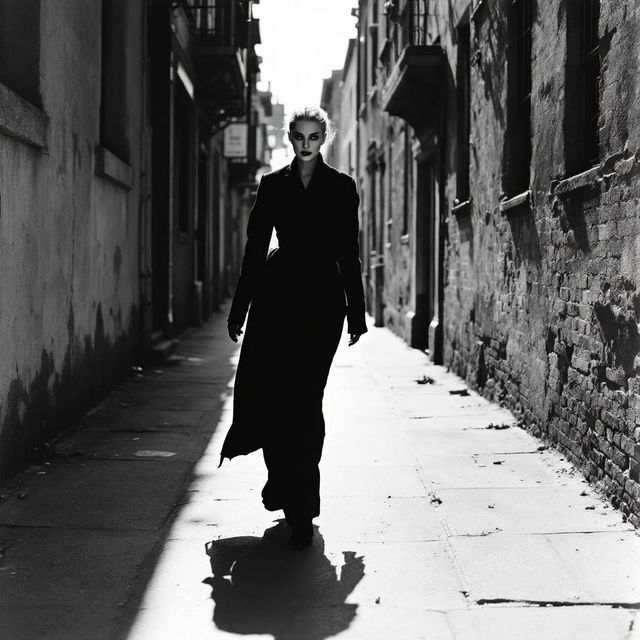 Cool Staged SolarizationHelmut Newton + Cindy Sherman + Man Ray, where Newton’s bold monochrome lighting and intimate composition should define…